
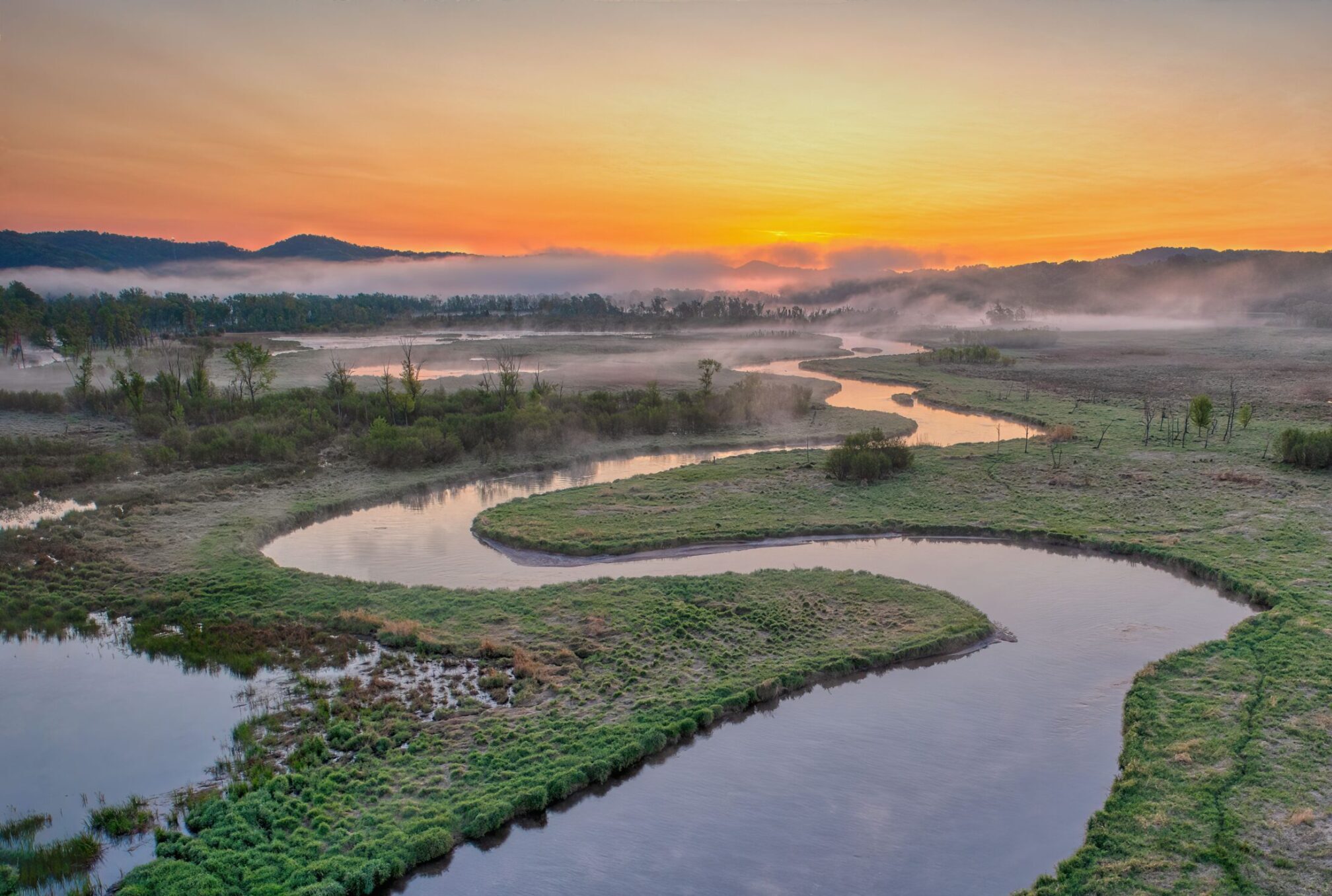
It starts with a single drop of glacial water on granite.
Then another. And another. Over time — not days, not years, but centuries — those drops wear the rock down. First smoothing it, then cutting into it, then splitting it apart entirely. What begins as a trickle becomes a stream. The stream finds others. A river takes shape.
I have spent time near rivers. Not studying them — just watching. And the longer you watch, the harder it becomes to ignore what they have to teach.
A river does not fight what it cannot move.
It finds the line of least resistance and takes it. Not because it lacks force — anyone who has watched a river in flood knows it has force enough — but because force spent against an immovable object is force wasted. The river goes around. Over time, even the rock gives way. But the river does not wait for that. It moves now, by the available path.
There is a lesson here for anyone running an operation. The leaders who exhaust their organisations fighting structural realities — market conditions, regulatory constraints, deeply embedded habits — tend to achieve less than those who work around them while building toward something better. Not surrender. Navigation.
A river knows where it is going.
It does not meander without purpose. Even where it curves, it is responding to the terrain beneath it, finding the gradient that pulls it forward. The destination — the sea, the basin, the lower ground — is constant. Only the route adjusts.
In service businesses, this matters more than most leaders acknowledge. Teams that lack a clear destination do not stand still — they drift. They fill the space with activity that feels productive but does not accumulate into anything. A river without a gradient becomes a swamp.
Clarity of direction is not a luxury. It is the difference between momentum and stagnation.
A river carries everything forward.
Silt, debris, nutrients — all of it travels downstream. The river does not sort what it carries. But what it deposits, over time, builds something: deltas, floodplains, entire ecosystems. Fertility follows the river’s path.
In teams, the equivalent is the unglamorous work of operational discipline. The daily handoffs done properly. The standard was upheld not once but consistently. The update was given without being chased. None of it is dramatic. All of it accumulates. The organisations that protect service quality at scale are the ones where this discipline is not occasional — it is the current everyone moves in.
A river in flood is not the same river as a river in dry season.
Same source. Same bed. Different volume, different pace, different force. But the direction remains unchanged.
This is perhaps the quality most worth studying. The ability to adjust without losing direction. To move faster when conditions allow and more carefully when they don’t — but never to stop moving, and never to forget where you are headed.
The best operators I have encountered share this quality. Pressure does not disorient them. They read the conditions, adjust the approach, and keep going.
The river does not arrive anywhere in a hurry. It arrives because it does not stop.
That, more than anything else, is what twenty years of working inside complex service operations have taught me. Not speed. Not force. Consistency of direction and the willingness to keep moving when the path gets difficult.
The river figured this out long before we did.




Recent Comments